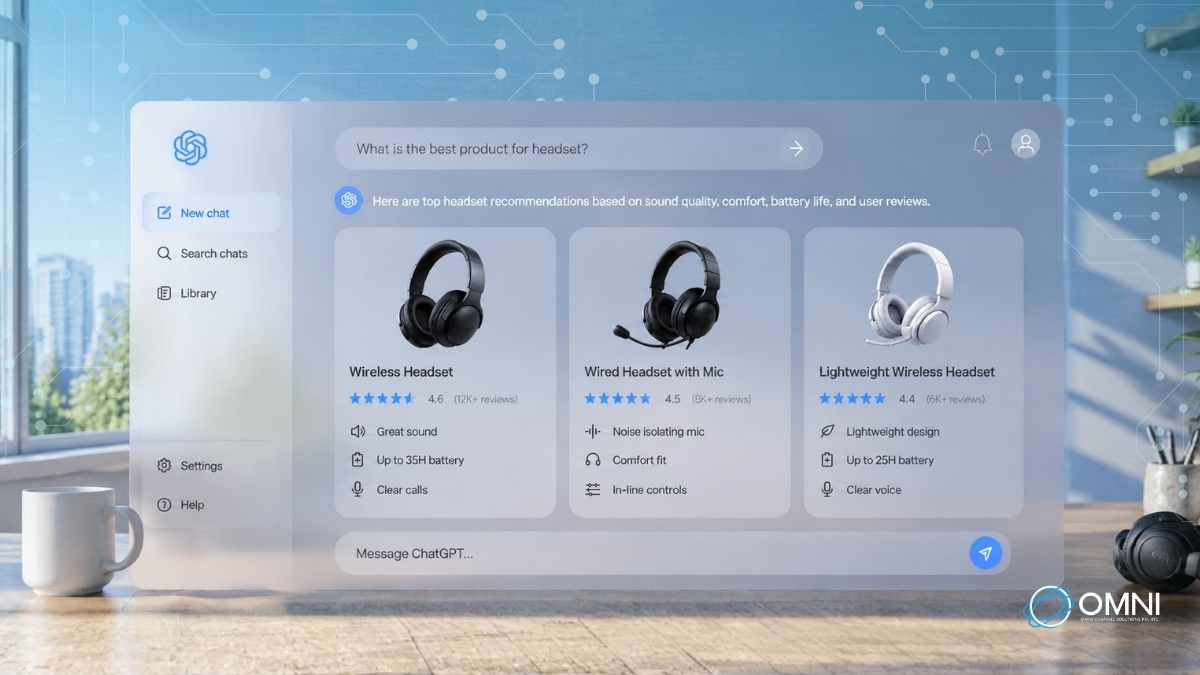
Search used to mean a list of blue links. Now it increasingly means a synthesized answer, generated on the spot by a language model that has already decided which brands are worth mentioning. ChatGPT, Gemini, and Perplexity field enormous volumes of queries every day, and most companies have no idea whether they’re showing up in the answers, being left out, or worse, being described unfavorably.
This isn’t a pitch for AI Visibility tracking and optimization services. It’s a walkthrough you can run yourself, today, to find out where your brand actually stands before deciding whether to handle it in-house or bring in help.
The scale involved is worth sitting with for a second. ChatGPT picked up 100 million users faster than any consumer app in history, and Google AI Overviews now reaches more than a billion people every month. That’s the audience a brand risks disappearing from if nobody’s watching.
Why AI Visibility Tracking Matters Now
The shift from “click a link” to “get an answer” changes what visibility even means. AI visibility is simply whether a brand gets surfaced, named, or recommended when someone asks a large language model a question relevant to that brand’s category, product, or expertise.
The upside for brands that get this right is real and measurable. Generative Engine Optimization strategies have been shown to lift a brand’s visibility in AI-generated responses by as much as 40%, according to research from Princeton and the Allen Institute for AI presented at KDD 2024. Content built around specific statistics and direct quotes performed 30 to 40% better than content without them. That’s a meaningful gap, and without any tracking in place, there’s no way to know which side of it a brand falls on, or whether competitors are quietly pulling ahead.
The 3 Types of AI Visibility — Know Which One You’re Getting
Not all AI visibility looks the same, and lumping it all together makes it harder to act on. There are three distinct outcomes worth separating.
Cited and linked
This is the outcome everyone wants: an AI answer names the brand and links directly to its site. It’s also the rarest of the three, since most generative answers are built to stand on their own rather than push traffic elsewhere.
Mentioned but not linked
The brand gets named in the answer, but there’s no click-through. This still matters. A mention shapes how a model frames a brand in future answers and influences a reader’s perception even without driving a visit.
Invisible or negative
The brand doesn’t come up at all, or it comes up in a way that isn’t flattering. Both are worth knowing about, because they point to different fixes.
Third-party presence plays a bigger role here than most brands expect. Semrush’s research on generative engine optimization points out that user-generated platforms like Reddit and YouTube carry outsized weight in how these models source their answers, which means a brand’s visibility can hinge on conversations happening well outside its own website.
How to Track Your AI Visibility
None of this requires an expensive platform to get started. A few manual habits will tell you most of what you need to know.
Referral traffic and brand-search lift
Check Google Analytics 4 and Search Console for upticks in direct or unattributed traffic alongside branded search volume. Worth noting upfront: analytics tools don’t cleanly isolate AI-referral traffic today. Treat this as a proxy signal, not a direct measurement.
Manual prompt testing
Pick a set of prompts a real customer might type, and run the same ones across ChatGPT, Gemini, Perplexity, and Google AI Overviews on a regular cadence, say, weekly. Log what comes back: is the brand named, who else gets named alongside it, and how is it described.
Tracking which URLs the AI pulls from
When an answer does cite sources, look at where they’re coming from. Is it the brand’s own pages, a competitor’s, or a third-party review site? That mix tells you a lot about who currently controls the narrative in that answer.
A basic crawler check
Look at server logs for hits from GPTBot, Google-Extended, and PerplexityBot. A site these crawlers can’t reach can’t show up in the answers those models generate, no matter how good the content is.
Closing the attribution gap
Add a simple “How did you hear about us?” option that includes an AI tool on contact forms and intake flows. It’s a low-effort way to catch conversions that analytics alone will never trace back to their source.
Why This Adds Up to More Than a Spreadsheet
Running these checks once will tell you where things stand today. Running them consistently, across four platforms, against a moving set of competitors, while cleaning up citations that are outdated or wrong, is a genuine time cost that adds up fast for a marketing team already stretched thin.
There’s a silver lining, though. As Semrush puts it, if a brand has already been doing solid SEO work for years, it’s already much of the way toward doing GEO well. This isn’t a separate discipline built from scratch; it’s an extension of work most brands are already doing.
For brands that would rather not turn this into an ongoing side project, this is the kind of continuous monitoring, benchmarking, and citation cleanup OMNI 360 handles for clients day to day.
Building the Right Team for AI Tracking
Any brand already investing in content and SEO but hasn’t yet extended that work into the AI layer should be paying attention here — agencies, B2B companies, ecommerce brands, and local service businesses alike. If your team suspects you might already be behind on this, that instinct is worth acting on.
Frequently Asked Questions
What is AI visibility tracking? AI Visibility Tracking is the process of measuring how often, how prominently, and how accurately a brand appears in AI-generated answers across platforms like ChatGPT, Perplexity, Gemini, Google AI Overviews, and AI Mode. Unlike traditional SEO tracking, which focuses on blue-link rankings, AI Visibility Tracking measures whether a brand is mentioned, cited, and represented accurately within the answers users increasingly rely on—providing a clear view of a brand’s visibility in zero-click, AI-driven search.
Can I see ChatGPT or Perplexity referral traffic in Google Analytics? Not cleanly. GA4 and Search Console can show upticks in direct traffic or branded search that may correlate with AI mentions, but there’s currently no clean way to isolate AI-referral traffic as its own channel. Treat these as proxy signals rather than direct measurement.
How often should I check my brand’s AI mentions? A weekly cadence works well for most brands. AI models update frequently enough that a monthly check can miss meaningful shifts, while daily checks are usually more effort than the insight justifies for a small or mid-sized team.
Do I need paid tools to track AI visibility, or can I do it manually? Manual tracking works fine to start. Running the same prompts across the major AI platforms on a set schedule and logging the results by hand will surface most of what a brand needs to know before it makes sense to invest in dedicated tooling.
What’s the difference between being mentioned and being recommended by AI? A mention means AI recognizes your brand and can describe it when someone asks about it directly. A recommendation means AI actively suggests your brand when someone asks for the best options or solutions in your category. Mentions show you exist; recommendations show AI has enough confidence in your brand to direct potential customers toward you.
How is AI visibility tracking different from traditional SEO tracking? Traditional SEO tracking focuses on rankings and click-through traffic from search engine results pages. AI visibility tracking looks at whether a brand is named or cited inside a generated answer, where there may be no link and no click at all. The underlying work overlaps significantly, but the way success gets measured is different.
See Where Your Brand Stands in AI Search
AI Visibility is only one part of building a stronger digital presence. At Omni Channel Solutions, we help brands turn insights into action through AI Visibility Optimization, digital performance, marketplace management, retail media, and scalable operational support.
Whether you’re ready to measure your AI Visibility with OMNI 360 or explore how our broader solutions can help your business grow, we’re here to help you take the next step.